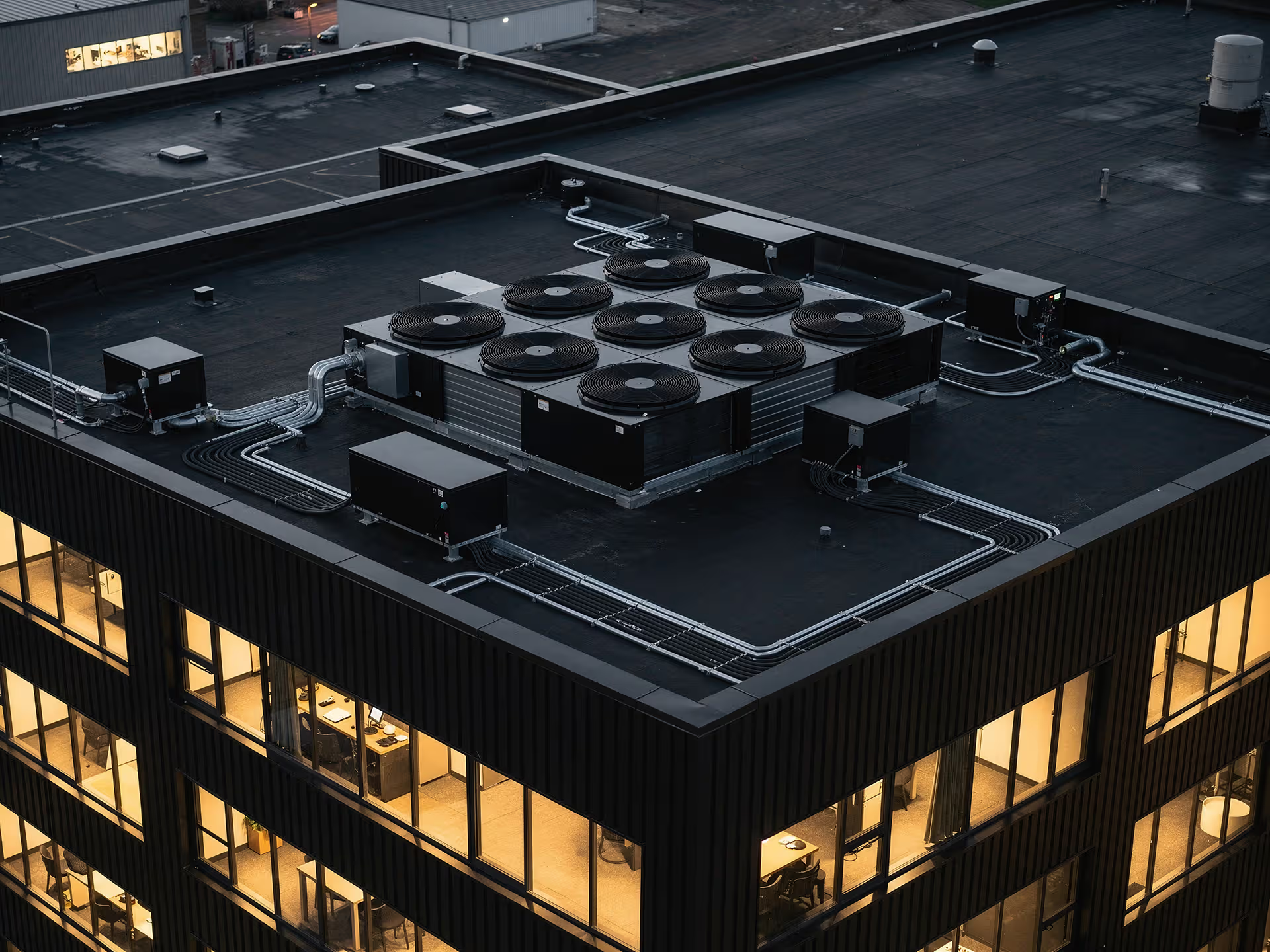
Value Engineering
We optimize your preliminary design with regard to CapEx and OpEx, identify risks, and review the system design.
You make the most expensive decision at the beginning,
with the least amount of data.
About 80% of the life-cycle costs are determined during design phases 1–3, but alternatives are estimated rather than calculated. The result: oversized building services, facades that never pay for themselves, and decisions that you cannot justify with numbers to investors and banks.
Any corrections made later will cost many times as much.
What is value engineering in construction?
In the early planning phases (LPH 1 through 3), approximately 80% of the life-cycle costs are determined, yet alternatives are estimated rather than calculated. The result is oversized building services, facades that never pay for themselves, and decisions that you cannot justify with numbers to investors and banks. Any subsequent corrections cost many times as much. Energy and thermal simulations analyze your building with physical precision and identify the most cost-effective option based on your goals and requirements.
Proven Engines for Every Calculation

Using EnergyPlus, we calculate the dynamic heating and cooling loads at the room level and simulate the efficiency of the systems over the course of the year.
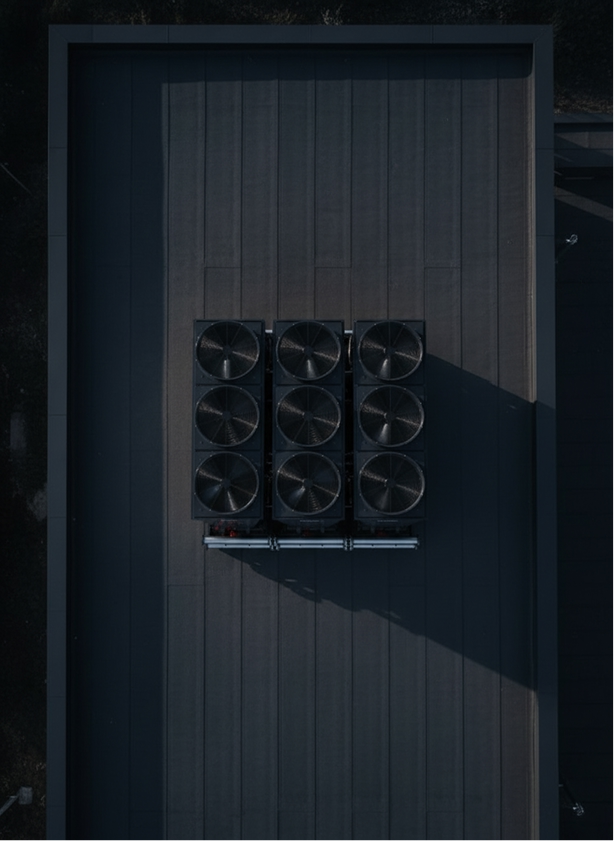
Using Modelica and flow simulation, we model ventilation systems and complex building services systems and calculate their efficiency in detail.

component-specific analysis
We go as far as reviewing the technical data sheets for individual components and calculate the efficiency of specific products from different manufacturers to ensure a reliable comparison at the product level.

recommendations
recommendations
You'll get a clear overview of where improvements can be made and how much they'll yield. This includes all raw data, analyses, and simulation results.
Understanding Complexity, Reducing CapEx
Explore every aspect of the building—from the big picture down to individual components—and identify exactly where you can save on CapEx.
Customers Who Use Value Engineering



Projects that maximize your return on investment.
-
CapEx, OpEx, and lifecycle costs optimized over the entire service life.
-
Planning risks identified early, before they become costly during implementation.
-
Systems and components undergo rigorous performance comparisons.
Frequently Asked Questions
Building plans, schematics, and the current design plans are helpful—as well as, if needed, the specific components planned (including manufacturers), an existing heating and cooling load calculation, and your space and optimization goals. Missing information is not a problem: Value engineering works even with limited data.
Specific recommendations for reducing CapEx: optimized system sizing, selecting different components or manufacturers, adjusting heat pump sizes, and even implementing completely alternative systems. Depending on your goals and initial situation, you’ll receive the recommendations as a PDF—and can then download all the raw data: heating and cooling load calculations, simulation data, and investment costs.
Yes. Whether it's a new construction or a renovation—every design plan, every concept, and every existing layout can be optimized and re-evaluated.
No. You just need to know what you want to optimize, as well as the relevant context, requirements, and goals. The results will be formatted so that you can use them directly in a management presentation.
Rare in practice. Traditional planning often relies on empirical values and does not delve deeply enough into sizing, heating and cooling load calculations, or detailed system efficiency. It is precisely in these areas that a great deal of untapped potential lies, which an in-depth simulation can reveal.
No. You can upload any type of schedule in any format—your existing processes remain unchanged. OPTIMUSE integrates seamlessly, with no training required.
Work through your option before it is finalized.
The sooner you do the calculations, the less expensive the correction will be. In the demo, you can see just how quickly it's done.